Faced with rising community demand and the limitations of an ageing facility, EPTEC partnered with KEVOS® to reimagine the Smithfield carpark as a benchmark for modern urban parking. The brief called for more than capacity — it required a smarter, safer, and more sustainable environment that could serve users today and adapt to the demands of tomorrow.
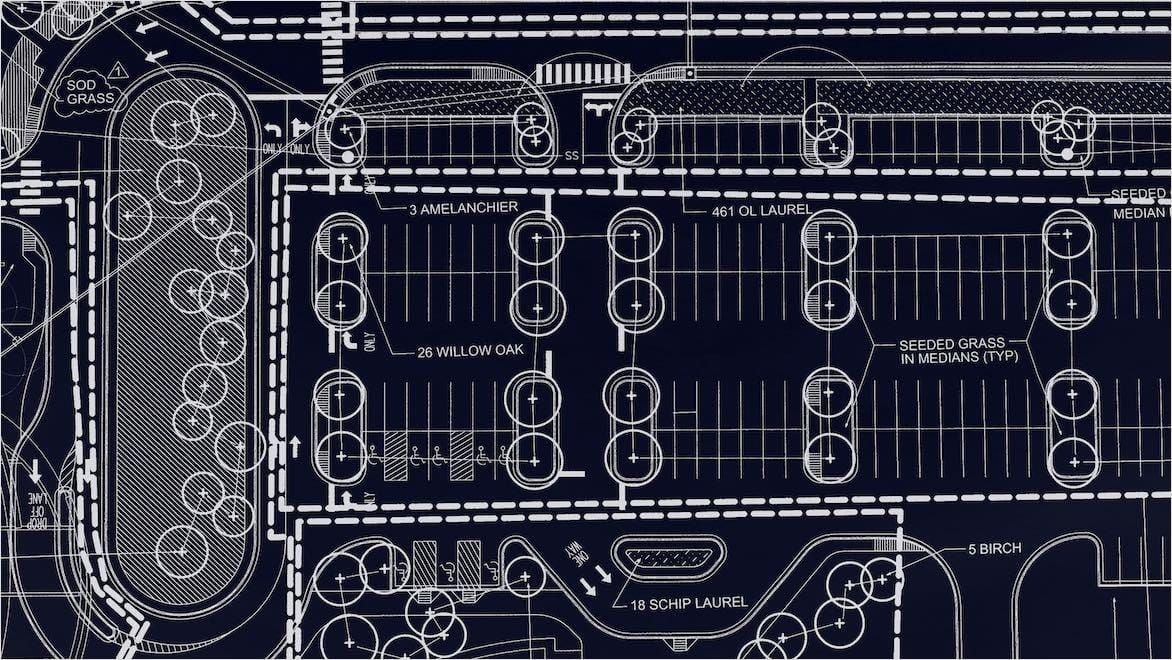
KEVOS® approached the challenge through a data-led methodology, combining traffic flow analysis, end-user research, and close collaboration with local authorities to ground every design decision in real-world insight. Working within a constrained footprint and a disciplined budget, our team developed a multi-level concept that unlocks vertical capacity without compromising accessibility or movement.
The final concept introduces a one-way circulation system, dedicated pedestrian corridors, soft landscaping with native planting, and permeable paving for stormwater management. Layered on top is a smart-parking framework — real-time bay availability, mobile integration, and pre-booking functionality — transforming the facility from passive infrastructure into a connected, future-ready asset.
The result is a 20% uplift in capacity, measurable improvements in safety and traffic flow, and a visibly elevated public space that reflects the community it serves. The Smithfield redesign showcases KEVOS®' ability to translate engineering precision into meaningful, user-centred outcomes.
Key Highlights
- 20% capacity uplift achieved within an existing constrained footprint
- Smart-parking integration with real-time availability and pre-booking capability
- Sustainability-led design featuring permeable paving, native landscaping, and reduced heat gain
- Enhanced safety architecture through segregated pedestrian paths and one-way vehicle flow
- Stakeholder-aligned outcome delivered through rigorous engagement with authorities and end users