Skip to content

A Complete Guide to Addition, Subtraction, Multiplication & Division

The Four Operations That Run Reality

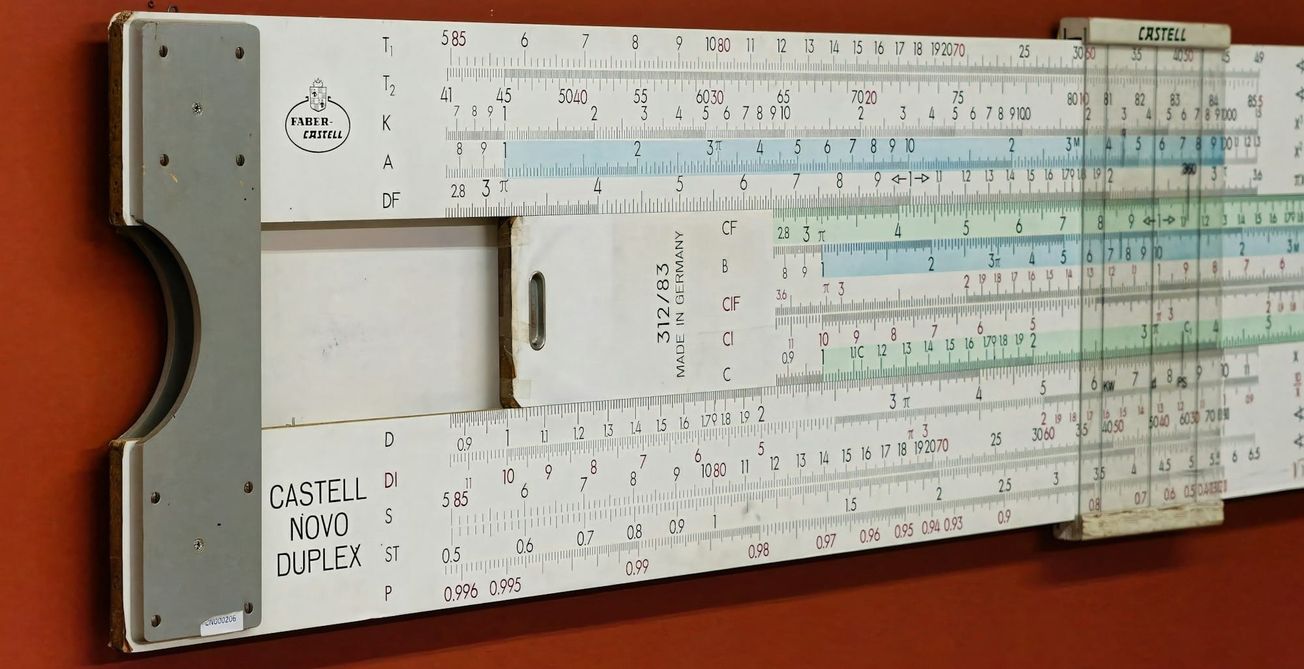
Photo by Rishi / Unsplash
How a struggling shopkeeper, a tearful nine-year-old, and a retired bridge engineer discovered that all of arithmetic — and most of daily life — runs on exactly four ideas.

Quick Summary

  • What this article covers: A complete, intuitive, and worked-through guide to the four operations of arithmetic across whole numbers, fractions, and decimals.
  • Why it matters: Most adults who say "I'm not a math person" don't have a knowledge gap — they have an understanding gap. Fixing that gap unlocks budgeting, business, cooking, construction, and clear thinking.
  • Key insight: Addition, subtraction, multiplication, and division aren't four separate skills. They are four views of one relationship — how quantities combine, separate, scale, and share.
  • Who this is for: Adult learners rebuilding confidence, parents teaching their children, teachers looking for cleaner explanations, and curious minds who want the why behind the rules.

Introduction: Three People, One Problem

Maya stared at her cash register like it was written in a language she'd never learned.

Three weeks into running her first grocery shop, every evening ended the same way. She counted the inventory. She tallied the sales. She calculated change. And somewhere between the first customer and the last, the math fell apart. "I'm not a math person," she muttered for the hundredth time.

Down the street, nine-year-old Kofi sat at his kitchen table, a tear sliding onto his homework. The problem read: "A farmer has 3/4 of a field planted with maize and 1/8 with beans. How much of the field is planted?" He had no idea where to begin.

And three blocks away, Mr. Arturo — a retired civil engineer who had designed bridges across three continents for forty years — sat tutoring his granddaughter and froze. She had asked a simple question. "Grandpa, why does 6 × 7 = 42?" And for the first time in his life, he realized he didn't know. He had memorized the answer decades ago. He had used the answer a million times. But he had never been told why.

Three people. Three lives. One shared problem:

They didn't need more math. They needed to understand the math they already had.

This is the story of how the four basic operations of arithmetic — addition, subtraction, multiplication, and division — stopped being school subjects for Maya, Kofi, and Mr. Arturo, and became something else entirely: the operating system of reality.

By the end of this guide, you'll see them the same way.


Chapter 1: What Numbers Actually Are

Before any of the four operations make sense, the thing being operated on has to make sense. So let's start where most math textbooks refuse to start — at the very beginning.

Numbers Are a Language, Not a Subject

When you hold up three fingers, the concept of three-ness exists whether or not you have a word for it. Numbers are humanity's invention for naming quantities — so we can communicate them, compare them, and combine them. That's it. That's all they are.

This single shift in framing changes everything. Math isn't a subject to pass. It's a language you already half-speak.

The Number Family Tree

Every number you'll ever meet in daily life belongs to one of three families — and all three families are connected by exactly four operations.

                       NUMBERS
                          │
           ┌──────────────┼──────────────┐
           │              │              │
     WHOLE NUMBERS    FRACTIONS       DECIMALS
     (0, 1, 2, 3…)   (1/2, 3/4…)     (0.5, 0.75…)
           │              │              │
           └──────────────┼──────────────┘
                          │
                 ALL CONNECTED BY
                          │
              ┌───────┬───┴───┬─────────┐
              │       │       │         │
             ADD   SUBTRACT MULTIPLY  DIVIDE
              +       −        ×        ÷

What this means for you: Whether you're calculating a tip, splitting rent, scaling a recipe, or building a budget — you are using some combination of these four operations on these three types of numbers. Always. Every time. There is nothing else.

The Three Faces of the Same Number

Every quantity can wear three masks. They look different. They behave the same.

Whole Number Fraction Decimal
1 1/1 1.0
2 2/1 2.0
Half of something 1/2 0.5
Quarter of something 1/4 0.25
Three-quarters 3/4 0.75
One-third 1/3 0.333…
One-eighth 1/8 0.125
The critical insight: These aren't different numbers. They are the same number in different outfits. Knowing how to move between the three forms is one of the highest-leverage skills in all of arithmetic.

We'll return to this conversion skill in Chapter 6. For now, hold on to the idea that form is not substance. The number 0.5 and the number 1/2 are the same person wearing a different coat.


Chapter 2: Addition — The Art of Combining

Maya's First Breakthrough

Maya's first real shift came on a Tuesday afternoon.

A customer bought three items: priced at 4.75, 12.30, and 0.95. Maya punched the numbers in one by one but kept second-guessing herself. Was the total 17? 18? She felt the familiar panic rising up her throat.

Then her neighbor — a retired math teacher named Mrs. Okoro — walked into the shop, watched Maya struggle for a moment, and said the sentence that rewired her entire relationship with arithmetic:

"Maya, addition is just counting forward. That's all it's ever been."

What Addition Actually Is

At its core, addition answers one question: how much do I have when I put these together?

The formal definition is simple: <code>a + b = c</code>, where a and b are the addends (the parts) and c is the sum (the whole). But forget the formula for a moment. The real definition is:

Addition = combining groups into a single, larger group.

You already do this instinctively. Grab 3 apples, then grab 2 more — your brain produces "5" before you can think about it. The challenge only appears when the numbers get bigger, involve decimals, or use fractions. The principle never changes.

Adding Whole Numbers: The Place Value Secret

Every digit in a number has a position, and that position determines its value.

  Thousands  Hundreds  Tens  Ones
      ↓         ↓       ↓     ↓
      3,        4       5     7

The number 3,457 means:

Place Digit Value
Thousands 3 3,000
Hundreds 4 400
Tens 5 50
Ones 7 7
Total 3,457

When you add, you combine digits in the same place value column. That's the entire trick.

Worked example: 2,847 + 1,365

    2, 8 4 7
  + 1, 3 6 5
  ─────────
    4, 2 1 2

Step by step:

  • Ones: 7 + 5 = 12 → write 2, carry 1
  • Tens: 4 + 6 + 1 (carried) = 11 → write 1, carry 1
  • Hundreds: 8 + 3 + 1 (carried) = 12 → write 2, carry 1
  • Thousands: 2 + 1 + 1 (carried) = 4
  • Result: 4,212

Why Carrying Isn't Magic

"Carrying" isn't a trick — it's what happens when a column sums to more than 9. Each place can hold only one digit (0–9), so any overflow moves to the next-higher place.

If a column gives you 14, that's really 1 ten and 4 ones. The 4 stays. The 1 carries into the tens column.

CARRYING VISUALIZED:

  Column adds to 14
        │
        ▼
  1 ten + 4 ones
   │         │
   ▼         ▼
  Goes to    Stays in
  tens       ones
  column     column

That's it. That's the whole rule. Place value just enforces a tidy-up.

Adding Decimals: Maya's Golden Rule

Back in Maya's shop, Mrs. Okoro showed her the entire rulebook for decimal addition in one sentence:

"Line up the decimal points, then add normally."

Worked example: 4.75 + 12.30 + 0.95

     4.75
    12.30
  +  0.95
  ───────
    18.00
  • Hundredths: 5 + 0 + 5 = 10 → write 0, carry 1
  • Tenths: 7 + 3 + 9 + 1 (carried) = 20 → write 0, carry 2
  • Ones: 4 + 2 + 0 + 2 (carried) = 8
  • Tens: 0 + 1 + 0 = 1
  • Result: 18.00

Maya's eyes went wide. It was just whole-number addition with a dot in it.

The rule you must never forget: Decimal points line up vertically. Always. If a number doesn't have enough decimal places to match the others, pad it with zeros. To add 5 + 3.27, rewrite 5 as 5.00, then add.

Adding Fractions: Kofi's Puzzle, Solved

Remember Kofi and the farmer's field? Let's solve it together.

The problem: 3/4 + 1/8 = ?

The rule: You can only add fractions when they share the same denominator. Why? Because the denominator tells you what size the pieces are.

Imagine a pizza cut into 4 slices and a different pizza cut into 8 slices. The slices are different sizes. You can't just count "three slices plus one slice" and get a meaningful answer — unless the slices match.

Step 1: Find a common denominator. The denominators are 4 and 8. The smallest number both divide into evenly is 8 (the Least Common Denominator, or LCD).

Step 2: Convert. Multiply top and bottom of 3/4 by 2.

3/4 = ?/8

3 × 2 = 6
4 × 2 = 8

So: 3/4 = 6/8

Step 3: Add the numerators.

<code>6/8 + 1/8 = (6 + 1)/8 = 7/8</code>

Answer: The farmer has planted 7/8 of his field.

Kofi stared at his paper. For the first time, it made sense. The pieces had to be the same size before you could count them together.

The Universal Fraction Addition Formula

Here's the process that works every single time, regardless of the denominators:

<code>a/b + c/d = (a × d + c × b) / (b × d)</code>

Worked example: 2/3 + 3/5

<code>2/3 + 3/5 = (2 × 5 + 3 × 3) / (3 × 5) = (10 + 9) / 15 = 19/15 = 1 and 4/15</code>

Adding Mixed Numbers

A mixed number is a whole number combined with a fraction, like 2 ¾.

Method: Add the whole parts. Then add the fraction parts. Then combine.

Worked example: 3 ½ + 2 ¾

  • Whole numbers: 3 + 2 = 5
  • Fractions: 1/2 + 3/4 = 2/4 + 3/4 = 5/4 = 1 ¼
  • Combine: 5 + 1 ¼ = 6 ¼

The Properties of Addition (And Why You Should Care)

These aren't academic rules. They're mental-math shortcuts the fluent use constantly.

Property What It Says Example Why It Matters
Commutative Order doesn't matter 3 + 7 = 7 + 3 = 10 Rearrange for easier mental math
Associative Grouping doesn't matter (2 + 3) + 4 = 2 + (3 + 4) = 9 Group easy pairs first
Identity Adding 0 changes nothing 5 + 0 = 5 Zero is addition's "do nothing"

Mental math trick using these properties: Want to add 47 + 36 in your head?

  • Rearrange: (47 + 3) + 33 = 50 + 33 = 83

You just used the associative property to make the problem easier. That's not cheating. That's fluency.


Chapter 3: Subtraction — The Art of Finding What's Left

Maya's Second Wall

Three weeks into the shop, Maya hit a new problem. Adding totals had become second nature — but customers kept handing her large bills, and she had to calculate change. Quickly. Under pressure. With a queue of impatient eyes watching her hands shake.

A customer's total was 7.35. The customer handed her a 20 note. Maya froze.

What Subtraction Actually Is

Subtraction answers a single question: how much is left when I take some away?

<code>a − b = c</code>, where a is the minuend (what you start with), b is the subtrahend (what you take away), and c is the difference (what remains).

But subtraction is more versatile than "taking away." It actually solves three different kinds of problems — all with the same operation.

THREE FACES OF SUBTRACTION:

1. TAKING AWAY     → "I had 10, spent 4, what's left?"
                      10 − 4 = 6

2. FINDING THE GAP → "How much more is 10 than 4?"
                      10 − 4 = 6

3. COMPARING       → "What's the difference between 10 and 4?"
                      10 − 4 = 6

Same operation. Three different real-world meanings. This is why subtraction shows up everywhere — from calculating change to measuring gaps to comparing scores.

Subtracting Whole Numbers: Borrowing Demystified

Worked example: 803 − 567

    803
  − 567
  ─────
    236

In the ones column, you need 3 − 7. But 3 is smaller than 7. Now what?

Borrowing (or "regrouping"): You borrow 1 ten from the tens column, converting it into 10 ones. Here the tens column is 0, so you have to borrow further back — a chain borrow.

  • Ones: Can't do 3 − 7 → borrow from tens. But tens column is 0.
  • Tens: Can't borrow from 0 → go to hundreds.
  • Hundreds: Borrow 1 hundred → 8 becomes 7, tens become 10.
  • Tens: Now borrow 1 ten from the 10 → tens become 9, ones become 13.
  • Ones: 13 − 7 = 6
  • Tens: 9 − 6 = 3
  • Hundreds: 7 − 5 = 2
  • Result: 236
BORROWING CHAIN VISUALIZED:

    8  0  3          7  10  3         7   9  13
  − 5  6  7   →    − 5   6  7   →   − 5   6   7
  ─────────         ──────────        ──────────
                                       2   3   6

Maya's Change-Making Breakthrough: Count Up, Don't Subtract

Mrs. Okoro then taught Maya a technique called "counting up" — a subtraction method that doesn't feel like subtraction at all.

Problem: 20.00 − 7.35 = ?

Instead of subtracting, count forward from 7.35 to 20.00:

 7.35  →  7.40   (added 0.05)
 7.40  →  8.00   (added 0.60)
 8.00  → 10.00   (added 2.00)
10.00  → 20.00   (added 10.00)
                  ──────────
                  Total: 12.65

The change is 12.65.

Maya started using this method every single day. No borrowing. No stress. Just counting forward — which most people find dramatically easier than subtracting backward.

Why this works for you: Next time you need to calculate change, or find the gap between two numbers, try counting up. It's the same subtraction — but it feels like addition.

Subtracting Decimals

Same golden rule as adding: line up the decimal points.

Worked example: 15.00 − 8.73

   15.00
  − 8.73
  ──────
    6.27
  • Hundredths: 0 − 3 → borrow → 10 − 3 = 7
  • Tenths: 9 (after borrowing) − 7 = 2
  • Ones: 14 (after borrowing) − 8 = 6
  • Result: 6.27

Subtracting Fractions

Same rule as adding: common denominator first, then subtract the numerators.

<code>a/b − c/d = (a × d − c × b) / (b × d)</code>

Worked example: 5/6 − 1/4

<code>5/6 − 1/4 = (5 × 4 − 1 × 6) / (6 × 4) = (20 − 6) / 24 = 14/24 = 7/12</code>

Simplification tip: Always check whether the answer can be reduced. Here, 14 and 24 share a factor of 2 — so 14/24 simplifies to 7/12.

Subtracting Mixed Numbers — The Tricky Case

Worked example: 5 ⅓ − 2 ¾

Step 1: Convert to improper fractions.

  • 5 ⅓ = (5 × 3 + 1) / 3 = 16/3
  • 2 ¾ = (2 × 4 + 3) / 4 = 11/4

Step 2: Find the common denominator (12).

  • 16/3 = 64/12
  • 11/4 = 33/12

Step 3: Subtract.

<code>64/12 − 33/12 = 31/12 = 2 and 7/12</code>

The Properties of Subtraction

Property Does It Apply? Example
Commutative No 5 − 3 = 2, but 3 − 5 = −2
Associative No (10 − 5) − 2 = 3, but 10 − (5 − 2) = 7
Identity Yes (subtracting 0) 8 − 0 = 8
Critical warning: Unlike addition, order matters in subtraction. You cannot rearrange the numbers freely. 5 − 3 is not the same as 3 − 5.

Chapter 4: Multiplication — The Art of Scaling

Mr. Arturo's Sleepless Night

Mr. Arturo had built bridges across three continents. He had used multiplication tens of thousands of times in engineering calculations. But when his eight-year-old granddaughter Lena asked, "Grandpa, what IS multiplying?" — he realized that for forty years, he had been using multiplication without truly understanding it.

He thought about it all night. By morning, he had the clearest explanation he had ever found:

"Multiplication is repeated addition that got tired of repeating."

What Multiplication Actually Is

<code>a × b = c</code>, where a and b are the factors and c is the product.

But what does it mean?

3 × 4 means: "three groups of four"

🍎🍎🍎🍎
🍎🍎🍎🍎
🍎🍎🍎🍎

Count them: 12 apples.

Or equivalently:

  • Add 4 three times: 4 + 4 + 4 = 12
  • Add 3 four times: 3 + 3 + 3 + 3 = 12

Both arrive at the same answer. That's the commutative property in action — the order of the factors does not change the product.

The Multiplication Table: Your Most Valuable Tool

Before fractions, before decimals, before algebra — this table is the single most valuable artifact in your mathematical toolkit. The fluent know it cold.

×  │  1    2    3    4    5    6    7    8    9   10   11   12
───┼─────────────────────────────────────────────────────────────
 1 │  1    2    3    4    5    6    7    8    9   10   11   12
 2 │  2    4    6    8   10   12   14   16   18   20   22   24
 3 │  3    6    9   12   15   18   21   24   27   30   33   36
 4 │  4    8   12   16   20   24   28   32   36   40   44   48
 5 │  5   10   15   20   25   30   35   40   45   50   55   60
 6 │  6   12   18   24   30   36   42   48   54   60   66   72
 7 │  7   14   21   28   35   42   49   56   63   70   77   84
 8 │  8   16   24   32   40   48   56   64   72   80   88   96
 9 │  9   18   27   36   45   54   63   72   81   90   99  108
10 │ 10   20   30   40   50   60   70   80   90  100  110  120
11 │ 11   22   33   44   55   66   77   88   99  110  121  132
12 │ 12   24   36   48   60   72   84   96  108  120  132  144

Mr. Arturo's revelation: He finally understood why 6 × 7 = 42. Arrange 6 rows of 7 objects (or 7 rows of 6) and you get 42 objects — not because someone said so, but because the geometry demands it. Multiplication isn't an arbitrary rule. It's a count.

The Standard Multi-Digit Algorithm

Worked example: 247 × 36

      2 4 7
    ×   3 6
    ───────
    1 4 8 2   ← 247 × 6
  7 4 1 0     ← 247 × 30  (shifted one position left)
  ─────────
  8 8 9 2

Step 1: Multiply 247 by 6 (the ones digit of 36).

  • 7 × 6 = 42 → write 2, carry 4
  • 4 × 6 = 24, + 4 = 28 → write 8, carry 2
  • 2 × 6 = 12, + 2 = 14 → write 14
  • Partial product: 1,482

Step 2: Multiply 247 by 3 (the tens digit of 36, which actually represents 30).

  • 7 × 3 = 21 → write 1, carry 2
  • 4 × 3 = 12, + 2 = 14 → write 4, carry 1
  • 2 × 3 = 6, + 1 = 7 → write 7
  • Partial product: 7,410 (shifted left because we're multiplying by 30, not 3)

Step 3: Add the partial products.

  • 1,482 + 7,410 = 8,892

Multiplying Decimals

The rule: Multiply as if there are no decimals. Then count the total number of decimal places in both original numbers. Place the decimal in the answer with that count.

Worked example: 3.14 × 2.5

  • Step 1: Multiply 314 × 25 = 7,850
  • Step 2: Count decimal places. 3.14 has 2 places. 2.5 has 1 place. Total: 3.
  • Step 3: Place the decimal three places from the right → 7.850 = 7.85
DECIMAL PLACEMENT RULE:

  3.14   ← 2 decimal places
× 2.5    ← 1 decimal place
──────
  7.850  ← 3 decimal places total
       = 7.85

Multiplying Fractions: A Beautiful Surprise

Here's the good news: multiplying fractions is easier than adding them. No common denominator required.

<code>a/b × c/d = (a × c) / (b × d)</code>

Multiply the tops. Multiply the bottoms. Done.

Worked example: 2/3 × 4/5

<code>2/3 × 4/5 = (2 × 4) / (3 × 5) = 8/15</code>

What Multiplying Fractions Actually Means

The notation "2/3 × 4/5" reads as "two-thirds of four-fifths." That word — "of" — is the secret. Multiplying fractions answers the question: what fraction of a fraction?

VISUALIZING 2/3 × 4/5:

Start with 4/5 of a whole (shaded):
┌──────┬──────┬──────┬──────┬──────┐
│██████│██████│██████│██████│      │
└──────┴──────┴──────┴──────┴──────┘

Now take 2/3 of that shaded part:
┌──────┬──────┬──────┬──────┬──────┐
│▓▓▓▓▓▓│▓▓▓▓▓▓│▓▓▓▓▓▓│▓▓▓▓▓▓│      │
│▓▓▓▓▓▓│▓▓▓▓▓▓│▓▓▓▓▓▓│▓▓▓▓▓▓│      │
│██████│██████│██████│██████│      │
└──────┴──────┴──────┴──────┴──────┘

The double-shaded (▓) area = 8 boxes out of 15 = 8/15

Multiplying Mixed Numbers

Always convert to improper fractions first. Trying to multiply mixed numbers directly is the most common source of fraction errors in adult math.

Worked example: 2 ½ × 1 ⅓

  • 2 ½ = 5/2
  • 1 ⅓ = 4/3

<code>5/2 × 4/3 = 20/6 = 10/3 = 3 and 1/3</code>

Cross-Cancellation: The Speed Trick

Before multiplying fractions, see if any numerator shares a common factor with any denominator. Cancel them first — and your numbers stay small.

Worked example: 8/15 × 5/12

  • The 8 (top) and 12 (bottom) share a factor of 4 → 8 ÷ 4 = 2, 12 ÷ 4 = 3
  • The 5 (top) and 15 (bottom) share a factor of 5 → 5 ÷ 5 = 1, 15 ÷ 5 = 3

<code>8/15 × 5/12 = 2/3 × 1/3 = 2/9</code>

Far cleaner than multiplying 8 × 5 = 40 and 15 × 12 = 180, then reducing 40/180 by hand.

The Properties of Multiplication

Property What It Says Example Real-Life Use
Commutative Order doesn't matter 4 × 7 = 7 × 4 = 28 Calculate whichever direction is easier
Associative Grouping doesn't matter (2 × 3) × 5 = 2 × (3 × 5) = 30 Regroup for mental math
Distributive Split and distribute 6 × 13 = 6 × 10 + 6 × 3 = 78 Break hard problems into easy ones
Identity Multiplying by 1 changes nothing 9 × 1 = 9 Converting fractions (× 2/2, × 3/3, etc.)
Zero Property Multiplying by 0 gives 0 1,000,000 × 0 = 0 If any factor is zero, the product is zero
The Distributive Property is the most powerful tool on this list. It's the bridge between addition and multiplication, and it is exactly the trick you'll use when you eventually learn algebra.

Mental math using the distributive property: 23 × 7 = (20 × 7) + (3 × 7) = 140 + 21 = 161


Chapter 5: Division — The Art of Sharing and Grouping

Maya's Final Door

Six months into the shop, Maya was unrecognizable.

She could add prices in her head. She could make change without flinching. She could calculate bulk discounts. But then a customer asked a question that opened the final door:

"If I buy 8 of these and the total is 52, how much is each one?"

Maya needed division.

What Division Actually Is

Division answers two related questions:

  1. Sharing: "If I split this equally among groups, how much does each group get?"
  2. Grouping: "How many groups of this size can I make?"

<code>a ÷ b = c</code>, where a is the dividend (what you're dividing up), b is the divisor (what you're dividing by), and c is the quotient (the answer).

Division is the inverse of multiplication. If 6 × 7 = 42, then 42 ÷ 7 = 6 and 42 ÷ 6 = 7.
MULTIPLICATION AND DIVISION: TWO SIDES OF ONE COIN

    6 × 7 = 42
         ↕
   42 ÷ 7 = 6
   42 ÷ 6 = 7

If you know one, you know all three.

This is one of the deepest insights in arithmetic. Multiplication and division are not separate skills. They are the same fact written two different ways.

Long Division: Step by Step

Worked example: 8,472 ÷ 6

        1, 4 1 2
       ┌─────────
   6   │ 8, 4 7 2
       − 6
       ───
         2 4
       − 2 4
       ─────
           0 7
         −   6
         ─────
             1 2
           − 1 2
           ─────
               0

The process — Divide, Multiply, Subtract, Bring down. Repeat.

  1. 6 into 8: Goes 1 time. 1 × 6 = 6. Subtract: 8 − 6 = 2.
  2. Bring down 4 → makes 24. 6 into 24 goes 4 times. 4 × 6 = 24. Subtract: 0.
  3. Bring down 7 → makes 07. 6 into 7 goes 1 time. 1 × 6 = 6. Subtract: 1.
  4. Bring down 2 → makes 12. 6 into 12 goes 2 times. 2 × 6 = 12. Subtract: 0.

Result: 1,412

Verification: 1,412 × 6 = 8,472 ✓

Division With Remainders

Worked example: 47 ÷ 5

         9  R 2
       ┌──────
   5   │  47
       − 45
       ────
          2  ← remainder

5 goes into 47 nine times (9 × 5 = 45), leaving 2 left over.

There are three ways to express the answer — and the right one depends on the situation:

Format Expression When to Use
Remainder 9 R 2 When leftover items can't be split (e.g. 47 people in groups of 5)
Fraction 9 and 2/5 For exact mathematical answers
Decimal 9.4 For measurements and money

Dividing Decimals

Case 1: Dividing a decimal by a whole number. Just divide normally and place the decimal point directly above its position in the dividend.

Worked example: 14.7 ÷ 3 = 4.9

Case 2: Dividing by a decimal. Move the decimal point in the divisor to make it a whole number, and move the decimal in the dividend the same number of places.

Worked example: 7.2 ÷ 0.4

Move decimal 1 place right in both numbers:

0.4 → 4
7.2 → 72

Now divide: 72 ÷ 4 = 18

Why this works: You're multiplying both numbers by the same power of 10. The quotient doesn't change — just like 10/2 and 100/20 both equal 5.

<code>7.2 ÷ 0.4 = (7.2 × 10) / (0.4 × 10) = 72 / 4 = 18</code>

Dividing Fractions: The Famous "Flip and Multiply"

This is one of the most famous rules in all of math — but very few people understand why it works.

<code>a/b ÷ c/d = a/b × d/c</code>

"Keep the first fraction, flip the second, and multiply."

Worked example: 3/4 ÷ 2/5

<code>3/4 ÷ 2/5 = 3/4 × 5/2 = 15/8 = 1 and 7/8</code>

Why Flipping Actually Works

Division asks: "How many of the second number fit inside the first?" Or equivalently: "What do I multiply the divisor by to get the dividend?"

Dividing by a fraction is the same as multiplying by its reciprocal — the flipped version. Here's the intuition that finally makes it click:

  • Dividing by 2 is the same as multiplying by 1/2.
  • Dividing by 1/2 is the same as multiplying by 2.
  • Dividing by 3/4 is the same as multiplying by 4/3.

The reciprocal is the multiplier that undoes a fraction. Once you see this, the "flip" stops feeling like a magic trick and starts feeling inevitable.

Dividing Mixed Numbers

Same advice as multiplication: convert to improper fractions first, then use keep-flip-multiply.

Worked example: 3 ½ ÷ 1 ¼

  • 3 ½ = 7/2
  • 1 ¼ = 5/4

<code>7/2 ÷ 5/4 = 7/2 × 4/5 = 28/10 = 14/5 = 2 and 4/5</code>

The Golden Rule of Division

You can never divide by zero.

Why? Because division asks: "What number, multiplied by the divisor, gives me the dividend?" If the divisor is zero, that question has no answer — because zero times anything is zero.

12 ÷ 0 = ???

This asks: 0 × ??? = 12
But 0 × (anything) = 0
So no answer exists.

DIVISION BY ZERO IS UNDEFINED.

This isn't a rule someone made up. It's a logical impossibility — like asking "what's north of the North Pole?" The question itself is broken.


Chapter 6: The Rosetta Stone — Converting Between Fractions, Decimals, and Whole Numbers

Mr. Arturo called this the Rosetta Stone — the single page that translates between all three forms of every number. Once you can move between them freely, math feels twice as easy.

Fraction → Decimal

Divide the numerator by the denominator. That's the whole rule.

Fraction Division Decimal
1/2 1 ÷ 2 0.5
1/4 1 ÷ 4 0.25
3/4 3 ÷ 4 0.75
1/5 1 ÷ 5 0.2
1/3 1 ÷ 3 0.333… (repeating)
1/8 1 ÷ 8 0.125
2/3 2 ÷ 3 0.666… (repeating)
5/6 5 ÷ 6 0.8333… (repeating)

Decimal → Fraction

Read the decimal as a fraction over the appropriate power of 10, then simplify.

Decimal Read As Simplified Fraction
0.5 5/10 1/2
0.25 25/100 1/4
0.75 75/100 3/4
0.125 125/1000 1/8
0.6 6/10 3/5
0.375 375/1000 3/8

The rule:

  • 1 decimal place → denominator is 10
  • 2 decimal places → denominator is 100
  • 3 decimal places → denominator is 1,000
  • And so on.

Converting Repeating Decimals to Fractions

Worked example: Convert 0.333… to a fraction.

Let x = 0.333…

Multiply both sides by 10: 10x = 3.333…

Subtract the original: 10x − x = 3.333… − 0.333…

Therefore: 9x = 3, so x = 3/9 = 1/3

Worked example: Convert 0.272727… to a fraction.

Since two digits repeat, multiply by 100: 100x = 27.272727…

Subtract: 100x − x = 27, so 99x = 27.

Therefore: x = 27/99 = 3/11

The Essential Conversion Chart (Memorize This)

This chart appears in cooking, construction, finance, statistics, sports analytics, woodworking, and shopping. Memorize it once, use it forever.

┌────────────┬──────────┬──────────────┐
│  FRACTION  │ DECIMAL  │  PERCENTAGE  │
├────────────┼──────────┼──────────────┤
│    1/2     │   0.5    │     50%      │
│    1/3     │   0.333… │     33.3…%   │
│    2/3     │   0.666… │     66.6…%   │
│    1/4     │   0.25   │     25%      │
│    3/4     │   0.75   │     75%      │
│    1/5     │   0.2    │     20%      │
│    2/5     │   0.4    │     40%      │
│    3/5     │   0.6    │     60%      │
│    4/5     │   0.8    │     80%      │
│    1/6     │   0.166… │     16.6…%   │
│    5/6     │   0.833… │     83.3…%   │
│    1/8     │   0.125  │     12.5%    │
│    3/8     │   0.375  │     37.5%    │
│    5/8     │   0.625  │     62.5%    │
│    7/8     │   0.875  │     87.5%    │
│    1/10    │   0.1    │     10%      │
│    1/100   │   0.01   │      1%      │
└────────────┴──────────┴──────────────┘

Chapter 7: Order of Operations — When Everything Happens at Once

Why You Need Rules for the Order

Look at this expression: 6 + 3 × 2

  • If you add first: (6 + 3) × 2 = 9 × 2 = 18
  • If you multiply first: 6 + (3 × 2) = 6 + 6 = 12

Two different answers! Which is correct? 12. And the reason is the universally agreed order of operations — without it, the same expression would mean different things to different people.

The Order (From First to Last)

┌─────────────────────────────────────────┐
│         ORDER OF OPERATIONS             │
│                                         │
│  1. PARENTHESES / BRACKETS  ( )  [ ]    │
│  2. EXPONENTS / POWERS      x²  √x      │
│  3. MULTIPLICATION & DIVISION  × ÷      │
│     (left to right)                     │
│  4. ADDITION & SUBTRACTION   + −        │
│     (left to right)                     │
│                                         │
│  Common Mnemonics:                      │
│  • PEMDAS (US) — "Please Excuse My      │
│    Dear Aunt Sally"                     │
│  • BODMAS (UK / AUS) — "Brackets,       │
│    Orders, Division, Multiplication,    │
│    Addition, Subtraction"               │
│  • BEDMAS (Canada)                      │
└─────────────────────────────────────────┘
Critical note: Multiplication and Division share equal priority — you do them left to right, whichever comes first. The same goes for Addition and Subtraction.

A Complex Example, Step by Step

Solve: 4 + 6 × (3 + 2)² ÷ 10 − 1

Step 1: Parentheses    → 4 + 6 × (5)² ÷ 10 − 1
Step 2: Exponents      → 4 + 6 × 25 ÷ 10 − 1
Step 3: Multiplication → 4 + 150 ÷ 10 − 1
Step 4: Division       → 4 + 15 − 1
Step 5: Addition       → 19 − 1
Step 6: Subtraction    → 18

Answer: 18

Order of Operations With Fractions

Worked example: (1/2 + 1/3) × 6 ÷ 2

Step 1: Parentheses → (3/6 + 2/6) × 6 ÷ 2
                    = (5/6) × 6 ÷ 2
Step 2: Multiply    → 5 ÷ 2   (since 5/6 × 6 = 5)
Step 3: Divide      → 5/2 = 2.5

Chapter 8: Real-World Applications — Where It All Comes Together

Maya's Monthly Inventory

Maya tracks her shop's monthly numbers with confidence now. Here's a simplified slice of her tracking sheet:

Revenue calculation:

Item Price per Unit Units Sold Revenue
Rice (kg) 2.50 340 850.00
Cooking Oil (L) 4.75 128 608.00
Sugar (kg) 1.80 215 387.00
Flour (kg) 1.25 186 232.50
Total 869 2,077.50
  • Each revenue figure uses multiplication: Price × Quantity = Revenue
  • The total uses addition: 850 + 608 + 387 + 232.50 = 2,077.50

Profit (subtraction):

Revenue:                 2,077.50
Cost of goods:         − 1,450.00
Operating expenses:    −   320.00
                       ──────────
Net Profit:                307.50

Profit margin (division):

<code>Profit Margin = Net Profit ÷ Revenue = 307.50 ÷ 2,077.50 ≈ 0.148 = 14.8%</code>

Four operations. One small business. Complete financial picture.

Kofi's Recipe Adventure

Kofi grew up to become a chef. He uses fractions every single shift.

Scaling a recipe from 4 servings to 10 servings:

Scaling factor: 10 ÷ 4 = 2.5

Ingredient Recipe (4 servings) Scaled (10 servings)
Flour 2 ½ cups 2.5 × 2.5 = 6 ¼ cups
Sugar ¾ cup 0.75 × 2.5 = 1 ⅞ cups
Butter ⅓ cup 0.333 × 2.5 ≈ ⅚ cup
Eggs 3 3 × 2.5 = 7.5 → 8 eggs

Every line uses multiplication. The scaling factor itself comes from division. The full ingredient list eventually adds up to one recipe.

Mr. Arturo's Community Garden

Mr. Arturo designs a community garden that is 15.75 meters long and 8.5 meters wide.

  • Area (multiplication): 15.75 × 8.5 = 133.875 square meters
  • Divide into 12 equal plots (division): 133.875 ÷ 12 ≈ 11.16 sq meters per plot
  • Perimeter for fencing (addition + multiplication): 2 × (15.75 + 8.5) = 2 × 24.25 = 48.5 meters
  • Cost if fence is 12.50 per meter (multiplication): 48.5 × 12.50 = 606.25
  • Remaining budget if total is 1,000 (subtraction): 1,000 − 606.25 = 393.75

One project. All four operations. No calculator required.


Chapter 9: Common Mistakes (And How to Stop Making Them)

Every expert was once a beginner who made these. Here's how to catch them before they catch you.

Addition Mistakes

Mistake Example Why It Happens Fix
Forgetting to carry 67 + 85 = 142 (wrong: 152) Rushing through columns Check every column: does any sum exceed 9?
Misaligned decimals 3.5 + 12.75 = 16.25 (wrong) Not lining up decimal points Write 3.5 as 3.50, then add
Adding unlike fractions 1/3 + 1/4 = 2/7 (wrong) Adding tops and bottoms Never add denominators. Find LCD first.

Correct: 1/3 + 1/4 = 4/12 + 3/12 = 7/12

Subtraction Mistakes

Mistake Example Why It Happens Fix
Borrowing errors 504 − 237 = 277 (wrong: 267) Losing track of borrowed values Work each column slowly
Reversing operands Writing 3 − 8 when you mean 8 − 3 Mixing up positions Larger number on top
Forgetting to pad decimals 5 − 0.27 mishandled Misaligned decimals Write 5 as 5.00

Multiplication Mistakes

Mistake Example Why It Happens Fix
Wrong decimal placement 2.5 × 3.2 = 80 (should be 8.0) Not counting decimal places Count total decimal places in both factors
Forgetting partial-product shift Skipping the shift left Ignoring place value Each new partial product shifts one place left
Multiplying denominators when adding 1/3 + 1/4 = 1/12 (wrong) Confusing addition with multiplication Addition needs LCD; multiplication doesn't

Division Mistakes

Mistake Example Why It Happens Fix
Forgetting to flip 1/2 ÷ 1/3 = 1/6 (wrong: should be 3/2) Skipping reciprocal step Keep, Flip, Multiply
Dividing by zero 5 ÷ 0 = 0 (wrong: undefined) Assuming all division returns a number Division by zero is always undefined
Misplacing the decimal 4.8 ÷ 0.6 = 0.8 (wrong: should be 8) Moving decimals unevenly Move both decimals the same number of places

Chapter 10: Building Number Sense — The Expert's Edge

What Actually Separates Beginners From Experts

It isn't speed. It isn't memorization. It's number sense — an intuitive feel for whether an answer is reasonable.

People who are fluent with numbers don't just compute. They estimate first, then compute. They notice when an answer "looks wrong" before they can articulate why. That's the skill you're building now.

Estimation: Your Built-In Calculator Check

Before you calculate anything precisely, estimate it first.

Example: 487 × 23

  • Estimate: 500 × 20 = 10,000
  • Actual: 487 × 23 = 11,201

If your calculator returned 112,010 or 1,120 — you'd know something was wrong before checking a single digit.

Rounding Rules

ROUNDING:

Look at the digit immediately to the RIGHT of the place
you're rounding to.

• If it's 0, 1, 2, 3, or 4 → Round DOWN (keep digit the same)
• If it's 5, 6, 7, 8, or 9 → Round UP (increase digit by 1)

Examples:
  3.742  rounded to 1 decimal place  → 3.7    (4 < 5, down)
  3.762  rounded to 1 decimal place  → 3.8    (6 ≥ 5, up)
  8,549  rounded to nearest hundred  → 8,500  (4 < 5, down)
  8,562  rounded to nearest hundred  → 8,600  (6 ≥ 5, up)

Five Mental Math Strategies the Fluent Actually Use

1. Make Tens. Reshape numbers to hit round figures.

<code>8 + 7 = (8 + 2) + 5 = 10 + 5 = 15</code>

2. Compensation. Round one number, then adjust.

<code>99 × 7 = (100 × 7) − (1 × 7) = 700 − 7 = 693</code>

3. Halving and Doubling. Halve one factor, double the other.

<code>25 × 48 = 50 × 24 = 100 × 12 = 1,200</code>

4. Fraction Benchmarks. Sanity-check by anchoring to known values.

  • Is the answer more or less than ½?
  • Is the answer more or less than 1?
  • Is the answer close to a whole number?

5. The Reverse Operation Check. Always verify using the inverse.

If:  345 + 228 = 573  → Check: 573 − 228 = 345 ✓
If:  84 ÷ 7 = 12      → Check: 12 × 7 = 84 ✓
If:  3/4 × 2/5 = 3/10 → Check: 3/10 ÷ 2/5 = 3/10 × 5/2 = 15/20 = 3/4 ✓

This habit alone catches the majority of arithmetic mistakes.


Chapter 11: Practice — Test Yourself

Don't skip this. Read-only learning evaporates within 24 hours. Worked practice survives years.

Level 1: Whole Numbers (Warm-Up)

# Problem Your Answer Solution
1 458 + 276 ___ 734
2 1,003 − 567 ___ 436
3 34 × 15 ___ 510
4 864 ÷ 12 ___ 72
5 25 + 175 + 300 ___ 500

Level 2: Decimals

# Problem Your Answer Solution
6 4.56 + 12.8 ___ 17.36
7 20.00 − 13.47 ___ 6.53
8 3.14 × 5 ___ 15.70
9 7.5 ÷ 0.25 ___ 30
10 0.6 × 0.4 ___ 0.24

Level 3: Fractions

# Problem Your Answer Solution
11 1/3 + 1/6 ___ 1/2
12 7/8 − 1/4 ___ 5/8
13 2/3 × 9/10 ___ 3/5
14 5/6 ÷ 2/3 ___ 5/4 = 1 ¼
15 3 ½ + 2 ⅔ ___ 6 1/6

Level 4: Mixed Operations & Order of Operations

# Problem Your Answer Solution
16 5 + 3 × 4 ___ 17
17 (8 − 3) × (2 + 4) ___ 30
18 12 ÷ 4 + 2 × 3 ___ 9
19 100 − 4 × (6 + 3²) ___ 40
20 (1/2 + 1/3) × 12 ___ 10

Level 5: Word Problems

Problem 21: A baker uses 2 ¾ cups of flour per batch. If she bakes 6 batches, how much flour does she need?

Solution: 2 ¾ × 6 = 11/4 × 6 = 66/4 = 16 ½ cups

Problem 22: A water tank holds 500 liters. It's currently 3/5 full. How many liters are in it?

Solution: 500 × 3/5 = 1,500/5 = 300 liters

Problem 23: A road is 12.5 km long. A runner has completed 7.83 km. How far is left?

Solution: 12.5 − 7.83 = 4.67 km

Problem 24: A family's monthly income is 3,500. They spend ¼ on rent, 1/5 on food, and 1/10 on transport. How much is left?

Solution: Rent: 3,500 × 1/4 = 875 Food: 3,500 × 1/5 = 700 Transport: 3,500 × 1/10 = 350 Total spent: 875 + 700 + 350 = 1,925 Remaining: 3,500 − 1,925 = 1,575

Problem 25: A plot of land is 45.6 m long and 30.25 m wide. If it costs 120 per square meter, what is the total cost?

Solution: Area: 45.6 × 30.25 = 1,379.4 sq m Cost: 1,379.4 × 120 = 165,528

Chapter 12: The One-Page Reference Sheet

The Four Operations at a Glance

┌─────────────────────────────────────────────────────────────┐
│                  THE FOUR OPERATIONS SUMMARY                │
├──────────────┬──────────────────────────────────────────────┤
│  ADDITION    │  Combining quantities                        │
│     +        │  a + b = sum                                 │
│              │  Commutative: YES   │  Associative: YES      │
│              │  Identity: 0 (a + 0 = a)                     │
├──────────────┼──────────────────────────────────────────────┤
│  SUBTRACTION │  Finding the difference                      │
│     −        │  a − b = difference                          │
│              │  Commutative: NO    │  Associative: NO       │
│              │  Identity: 0 (a − 0 = a)                     │
├──────────────┼──────────────────────────────────────────────┤
│  MULTIPLY    │  Repeated addition / Scaling                 │
│     ×        │  a × b = product                             │
│              │  Commutative: YES   │  Associative: YES      │
│              │  Identity: 1 (a × 1 = a)                     │
│              │  Zero property: a × 0 = 0                    │
├──────────────┼──────────────────────────────────────────────┤
│  DIVISION    │  Sharing / Grouping / Inverse of ×           │
│     ÷        │  a ÷ b = quotient                            │
│              │  Commutative: NO    │  Associative: NO       │
│              │  Identity: 1 (a ÷ 1 = a)                     │
│              │  WARNING: NEVER divide by 0                  │
└──────────────┴──────────────────────────────────────────────┘

Fraction Operations Cheat Sheet

┌──────────────────────────────────────────────────────┐
│              FRACTION OPERATIONS                     │
├──────────────────────────────────────────────────────┤
│                                                      │
│  ADDING / SUBTRACTING:                               │
│  • Need a COMMON DENOMINATOR                         │
│  • a/b ± c/d = (a·d ± c·b) / (b·d)                   │
│  • Then simplify                                     │
│                                                      │
│  MULTIPLYING:                                        │
│  • Multiply straight across                          │
│  • a/b × c/d = (a·c) / (b·d)                         │
│  • Cross-cancel first for smaller numbers            │
│                                                      │
│  DIVIDING:                                           │
│  • KEEP the first, FLIP the second, MULTIPLY         │
│  • a/b ÷ c/d = a/b × d/c                             │
│                                                      │
│  MIXED NUMBERS:                                      │
│  • Convert to improper fractions first               │
│  • (Whole × Denominator + Numerator) / Denominator   │
│  • 3 2/5 = (3·5 + 2)/5 = 17/5                        │
│                                                      │
└──────────────────────────────────────────────────────┘

Decimal Operations Cheat Sheet

┌──────────────────────────────────────────────────────┐
│              DECIMAL OPERATIONS                      │
├──────────────────────────────────────────────────────┤
│                                                      │
│  ADDING / SUBTRACTING:                               │
│  • Line up decimal points vertically                 │
│  • Pad empty places with 0s                          │
│  • Add or subtract normally                          │
│                                                      │
│  MULTIPLYING:                                        │
│  • Ignore decimals, multiply normally                │
│  • Count total decimal places in both factors        │
│  • Place decimal in answer with that count           │
│                                                      │
│  DIVIDING:                                           │
│  • Make divisor a whole number (move decimal right)  │
│  • Move dividend's decimal the same number of places │
│  • Divide normally                                   │
│                                                      │
└──────────────────────────────────────────────────────┘

Expert Insights: What the Fluent Know That You Don't (Yet)

After thousands of repetitions, people who think numerically all develop the same handful of habits. Steal them:

  • Estimate before you compute. Always. It's the single biggest difference between people who "do math" and people who "trust math." A good estimate catches 90% of errors before they're made.
  • Treat fractions and decimals as the same number. Don't memorize separate procedures — convert whichever form is easier for the moment.
  • Use the inverse operation to verify. If you added, check by subtracting. If you multiplied, check by dividing. This habit alone will cut your error rate in half.
  • Prefer mental rearrangement over mechanical computation. 99 × 7 isn't a long-multiplication problem. It's 100 × 7 − 7. The associative, commutative, and distributive properties exist to make life easier.
  • When fractions get hairy, convert to decimals. When decimals get hairy, convert to fractions. The right form matters more than people realize.
  • Always simplify at the end. A correct unsimplified answer (14/24) loses points and looks unfinished. A correct simplified answer (7/12) is the work of someone who knows what they're doing.
  • Treat "I don't know" as a temporary state. Mr. Arturo built bridges for forty years before he understood why 6 × 7 = 42. The gap closed the moment he asked the right question. Yours will too.

FAQ

What are the four basic operations of arithmetic?

The four basic operations are addition (+), subtraction (−), multiplication (×), and division (÷). They are the four ways quantities can be combined, separated, scaled, and shared — and virtually every numerical calculation you'll ever do is some combination of these four.

What is the correct order of operations?

The standard order is PEMDAS (or BODMAS in UK / AUS): Parentheses (Brackets), Exponents (Orders), Multiplication and Division (left to right), then Addition and Subtraction (left to right). Multiplication and division share equal priority — you do them in the order they appear. Same for addition and subtraction.

Why can't you divide by zero?

Because division asks: "what number, multiplied by the divisor, gives me the dividend?" If the divisor is zero, no number works — because anything multiplied by zero equals zero, not the dividend. So division by zero has no answer. It's undefined, not equal to zero or infinity.

Why do you "flip" the second fraction when dividing fractions?

Dividing by any number is the same as multiplying by its reciprocal (the flipped version). Dividing by 2 is the same as multiplying by 1/2. Dividing by 3/4 is the same as multiplying by 4/3. The reciprocal is the multiplier that undoes the original number — so flipping and multiplying is just a more efficient way to perform division.

Do you need a common denominator to multiply fractions?

No. A common denominator is only required for addition and subtraction of fractions — because you can only combine pieces of the same size. For multiplication and division, you simply multiply (or use keep-flip-multiply) directly. This is why multiplying fractions is often easier than adding them.

How do I convert a fraction to a decimal?

Divide the numerator by the denominator. For example: 3/4 = 3 ÷ 4 = 0.75. Some fractions produce repeating decimals — for example, 1/3 = 0.333…. There's no shortcut; the division is always the rule.

How do I convert a decimal to a fraction?

Read the decimal as a fraction over the appropriate power of 10, then simplify. For example: 0.75 = 75/100 = 3/4. Count the decimal places — one place means denominator 10, two places means denominator 100, three places means denominator 1,000, and so on.

What's the difference between a remainder, a fraction, and a decimal answer to a division problem?

All three express what's left over after division — they just present it differently. Remainders suit situations where leftover items can't be split (47 people in groups of 5 → 9 R 2). Fractions are exact mathematical answers (9 and 2/5). Decimals are best for measurement and money (9.4).

What is the distributive property and why is it useful?

The distributive property states that <code>a × (b + c) = (a × b) + (a × c)</code>. It lets you break a hard multiplication into two easier ones. For example: 6 × 13 = (6 × 10) + (6 × 3) = 60 + 18 = 78. It's the single most powerful mental-math tool, and it's also the foundation of algebra.

What's the fastest way to improve my mental math?

Three habits, in order: (1) Estimate before you compute — anchor every answer to a rough range. (2) Learn the multiplication table cold through 12 × 12. (3) Use the properties — commutative, associative, distributive — to rearrange every problem into the easiest possible form. Speed comes from cleverness, not raw recall.


Final Takeaways

Where Maya, Kofi, and Mr. Arturo Ended Up

Maya ran her shop for fifteen years and eventually expanded to three locations. She never bought complex inventory software — just solid arithmetic, done with confidence. "People think business needs advanced math," she once told a young entrepreneur. "It doesn't. It needs solid math."

Kofi became a head chef at a restaurant that serves 300 guests a night. Every recipe, every measurement, every cost calculation flows through fractions and decimals. The farmer's field problem from third grade wasn't homework. It was training for his life's work.

Mr. Arturo's granddaughter Lena is now studying architecture. She still remembers the night her grandfather spent explaining why 6 × 7 = 42 — not because someone said so, but because mathematics is true. That single conversation changed how she sees the world.

What This Means for You

You've now walked through the four operations that govern virtually every calculation you will ever make. Here's the truth that ties it all together:

Addition, subtraction, multiplication, and division are not four separate skills. They are four views of the same thing: the relationship between quantities.
  • Addition and subtraction are inverses. One combines. The other separates.
  • Multiplication and division are inverses. One scales up. The other breaks down.
  • Multiplication is repeated addition. Division is repeated subtraction.
  • Fractions, decimals, and whole numbers are the same values in different notation.

Once you see these connections, math stops being a list of rules to memorize and becomes a language to think in.

Your Next Step

Here's what separates people who know math from people who use math:

Practice.

Not worksheets-for-hours practice. Purposeful practice — embedded into your real life.

Starting today, try this:

  • Next time you're at a shop, estimate the total before the cashier tells you.
  • Next time you split a bill, do the division in your head before reaching for your phone.
  • Next time you cook, double or halve a recipe without a calculator.
  • Next time you read a statistic in the news, ask yourself what operation produced it.

The four operations aren't school subjects. They're life skills. They're how you measure the world, plan your future, and make decisions with clarity.

Maya, Kofi, and Mr. Arturo figured this out. Now it's your turn.


What's the one math operation you've avoided the most — and what would change if you mastered it? Think about it. Then go practice.

If this guide helped you see math differently, share it with someone who still says "I'm not a math person." They might just need a better story.

Comments

Latest